Posts

'Landscape Painter, Jamaica' by Vivian Virtue (An Analysis)

Image
Photo by Claudel Rheault on Unsplash In this poem, the speaker observes an artist painting the Blue Mountains. First, the painter sets up his easel then his brush, likened to a hummingbird, moves from palette to canvas to create a vibrant and realistic representation of the Blue Mountains.  The poem is also a dedication to Albert Huie (1920-2010), who was given the title 'Father of Jamaican Painting' and who became the first Jamaican to be recognised internationally for his prowess with the palette and paintbrush. His artwork focused on vivid portrayals of Jamaican landscapes and painting portraits of black Jamaicans and Jamaican life which were not typically the subjects of artwork. He was extolled for his discerning eye and his ability to showcase Jamaica's beauty. He inspired national pride for the country by using the strokes of his brush to influence how Jamaicans viewed themselves. Michael Manley, former prime minister of Jamaica, praised him for bringing the 'ma...

Exploring 'West Indies, U.S.A.' by Stewart Brown

Image
Photo by  Jerry Zhang  on  Unsplash OVERVIEW 'West Indies, U.S.A.' covers the speaker's experiences and impressions as he journeys by airplane from one Caribbean island to another.  In comparison to the affluent Puerto Rico, the other islands are either poor or not as prosperous. However, a closer look reveals that poverty exists in a place that is popularly known for its wealth. Stanza One The speaker is in an airplane and it is 30,000 feet above the island of Puerto Rico. As the plane descends, the speaker highlights that of all the islands he has passed through, Puerto Rico 'takes the pot', meaning Puerto Rico has won the jackpot for being the most prosperous of the islands. It is clear from this stanza that Puerto Rico is like no other island as it is referred to as the 'Dallas of the West Indies'. Stanza Two He reflects on the different airports he has just passed through that functioned as 'cultural fingermarks' or 'calling cards'. His ...

God's Grandeur - Gerard Manley Hopkins

Image
  Photo by  Kaitlin Muro  on  Unsplash God's Grandeur The world is charged with the grandeur of God.    It will flame out, like shining from shook foil;    It gathers to a greatness, like the ooze of oil Crushed. Why do men then now not reck his rod? Generations have trod, have trod, have trod;    And all is seared with trade; bleared, smeared with toil;    And wears man's smudge and shares man's smell: the soil Is bare now, nor can foot feel, being shod. And for all this, nature is never spent;    There lives the dearest freshness deep down things; And though the last lights off the black West went    Oh, morning, at the brown brink eastward, springs-- Because the Holy Ghost over the bent    World broods with warm breast and with ah! bright wings.                                      ...

Reflecting on 'Mirror' by Sylvia Plath

Image
Photo by  Giorgio Trovato  on  Unsplash OVERVIEW  Written in 1961, the poem focuses on conveying the mirror's importance in a woman's life. Mirrors are used to check our appearances so we can determine if they are in acceptable condition. Mirrors are of particular importance to women who are often pressured by society to meet demanding beauty standards. Usually, whatever mirrors reveal determines if we approve what we see or are left petrified. In this poem, the woman is left petrified. In the first stanza, through personification, the mirror makes it clear that it has no preconceptions, meaning it does not form any opinions about the people it reflects. Instead, whatever it sees it reflects faithfully without any bias or prejudice. The reflection it offers is merely the truth and not a deliberate attempt to be cruel. It offers itself as an objective object. The mirror presents itself as the 'eye of a little god'. Most times it faces a pink wall that has speckles (sp...

Breaking Down 'Blackout' by Roger Mais

Image
Photo by  natsuki  on  Unsplash SUMMARY A white woman is standing at the bus stop when she is approached by a black man. At  first she is not fearful of him because she has been cultured not to be easily frightened, and she is self-assured enough to believe that she can cry for help and be rescued by the suburban dwellers should she be attacked. However, her curiosity is sparked by the fact that he approaches her as if he has every right to do so, an action she finds surprising because in America, where she is from, black men do not usually approach white women.  The man asks her for  a light for his cigarette, but she informs him she has no matches. He indicates that she can give him a light from her cigarette. She is uncomfortable allowing him to light his cigarette using hers but he maintains a steady and challenging gaze that makes her uncomfortable enough to relent. She reluctantly offers her cigarette so he can take a light from it.  Instead of c...

Analysis of "It is the Constant Image of Your Face" by Dennis Brutus

Image
Picture source: Google  About Dennis Brutus - Key Historical Facts 1. Born 1924, Dennis Brutus was a prolific South African writer and activist. 2. He opposed the apartheid regime and was known for his campaign to have South Africa banned from the 1964 Olympics. 3. Apartheid (a system of racial segregation) lasted from 1948 to 1994.  4. According to the apartheid code, Brutus was classified as coloured. 5. Dennis Brutus was arrested several times for his anti-apartheid stance and later exiled to Britain. 6.  Later, he sought asylum in the United States. 7. During one of his times in prison, Nelson Mandela was in the cell beside him. 8.  His first collection of poems 'Sirens, Knuckles and Boots' was written while he was in prison. 9. Dennis Brutus, after years in exile, was able to return to South Africa in 2009. 10. He died in 2009. Analysis In the poem, 'It is the Constant Image of Your Face' the persona grapples with conflicting interests - his love for his co...

Exploring 'My Parents' by Stephen Spender

Image
Summary  In this poem, the speaker's parents keep him away from children who are rough. They do this in order to protect him from their aggression and unpredictable behaviour. These children are  verbally and physically abusive towards the speaker and this drives fear in him. However, it is seen that he longs to forgive them, but they do not change their attitude and actions towards him. Stanza 1 The speaker declares that his parents keep him from children who are aggressive. These children say hurtful words and wear torn clothing. They also run in the streets, climb cliffs and strip by country streams. The speaker and the other children are from different backgrounds - his parents are protective of him while the other children do not seem to be under much parental control. Stanza 2 The speaker is afraid of these children and voices this fear. He is terrified of their iron-like muscles, even more than he fears tigers. He is afraid of the way their hands jerk him and the pain h...

An Overview of Pearl Crayton's 'The Day the World Almost Came to an End'

Image
  SUMMARY One day, the narrator (twelve years old at the time), learns from her cousin Rena that the world is coming to end. Rena further urges her to repent in order to escape eternal damnation. The narrator is not accepting of this prophecy as she enjoys sinning, so she decides to wait until her father returns home to confirm whether or not it is true. As she waits for her father, she has several anxious thoughts where she recalls the worsts parts of Revelations she had read in the past and imagines what hell and the world ending would be like. When her father eventually reaches home, he seeks to reassure her that nobody truly knows when the world is coming to end. He discourages her from worrying about the world ending because this would deprive her of experiencing the joys of life. In the night, instead of following her father's advice to avoid worrying about the world ending, the narrator's apprehension intensifies as she tallies her sins and imagines all the 'real hot...

The Prologue's Significance in 'Ti-Jean and His Brothers'

Image
Before we explore the significance of the prologue, let us look at a definition of prologue as used in a play. Definition: A prologue is found at the beginning of a literary work and is used to provide background details or establish the context. When you consider significance , think importance , purpose or relevance . As you read the prologue, ask yourself: Why did Derek Walcott choose to begin the play with a prologue? What did he hope to achieve? It is in answering these questions that you will recognise that the prologue in Ti-Jean and His Brothers is significant for several reasons. 1. Themes:   It introduces important themes that will be explored in the play. Themes such as  poverty, the supernatural and religion are brought to the readers' attention in the prologue. It is clear that the family is very poor. They live in a hut and the mother who has lost her husband has struggled to provide for her family. When the light comes up on the three sons sitting around the ...

Strategies for Elevating Your Essay Writing Skills

Image
                                      A professional writer is an amateur who didn’t quit.” — Richard Bach Here's the undiluted truth: There is no way you can write effectively about something that you have  limited or no knowledge of. This is certainly the case when we consider writing a persuasive essay for CXC English A. Also, when we consider that the essay topic you will get on Section D of the paper is mandatory and you will not know until the day of the exam what this topic will be, it is prudent that you gather as much knowledge as you can about a range of topics leading up to the exams. You definitely don't want to be in the exam room screaming inside because you have no clue what the essay question is asking you to do. Bottom line :  The quality and quantity of the information you have stored in your mind determines the content you put on the examination paper. If you store...

Examining 'Sonnet Composed Upon Westminster Bridge' by William Wordsworth

Image
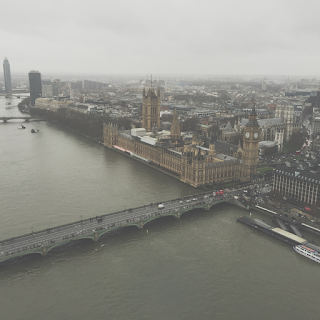
Sonnet Composed Upon Westminster Bridge, September 3, 1802 Earth has not anything to show more fair: Dull would he be of soul who could pass by A sight so touching in its majesty: This City now doth, like a garment, wear The beauty of the morning; silent, bare, Ships, towers, domes, theatres, and temples lie Open unto the fields, and to the sky; All bright and glittering in the smokeless air. Never did sun more beautifully steep In his first splendour, valley, rock, or hill; Ne'er saw I, never felt, a calm so deep! The river glideth at his own sweet will: Dear God! the very houses seem asleep; And all that mighty heart is lying still! ~ William Wordsworth - 1770-1850 NOTE: This poem is in the public domain. Consider the following questions as you read the poem: What is the speaker looking at? Where is he making his observation from? What time of day is it? What effect does the view have on the speaker? Does the poem use specific literary devices to convey meaning? How so? What is t...

An Analysis of Frank O'Connor's 'The Man of the House'

Image
In the story “The Man of House” the protagonist assumes the responsibility of tending to his sick mother and taking care of household chores. This act of love on his part is remarkable because he is a ten year old boy who is taking on a role that is traditionally assigned to females. It is clear that he cares for his mother because he stops from school to ensure that she is taken care of. He displays responsibility when he lights the fire to keep her and the house warm, prepares breakfast and goes on errands for her. He does not allow his mother to do anything strenuous even though she expresses guilt for burdening him. At first she tries to hide her condition but he recognizes her weakened state and insists on taking over. Minnie Ryan, a lady who visits his mother, expresses admiration at Sullivan’s willingness to meet his mother’s needs.  His mother is quite proud of this fact and says he is as ‘good as gold’. Miss Ryan states that he is one of the few who are like that because t...